
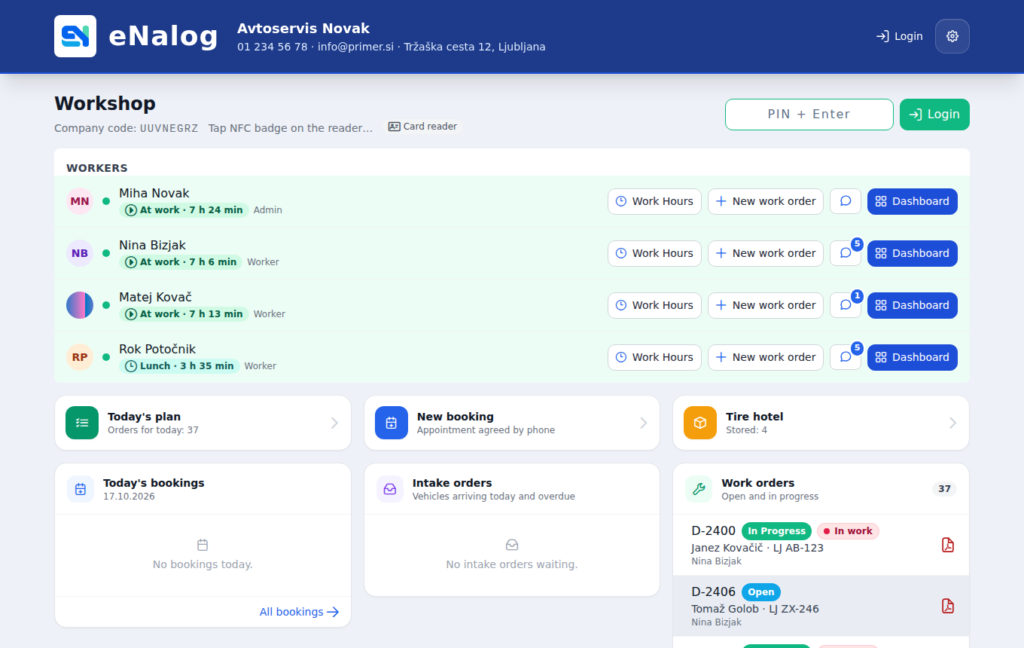
A full workshop doesn’t automatically mean a good month. If the hours your team spends in the workshop aren’t tied to the work you invoice, money is slipping away. Here are five signs it’s happening to you too.
1. You don’t know how long each service took
If you estimate time at the end of the day, the estimate is almost always too low. When the mechanic starts and stops work at the kiosk, you see the actual time and can adjust your prices or standard times.
2. The team keeps looking for information
Where’s the key, what did the customer say on the phone, have the parts arrived? Every question costs a few minutes. If everything is on a work order the whole workshop can see, those minutes disappear.
3. Booked slots stay empty
A customer who forgets their appointment means an empty hour. An SMS reminder the day before and online bookings cut down on empty hours and phone calls.
4. Small jobs never make it onto the invoice
Replacing a bulb, topping up fluids, a quick check – little things that get forgotten. When services and parts used are added to the work order as you go, they stay on the invoice.
5. You spend the end of the month retyping
Copying slips into invoices and hours into Excel isn’t work the customer pays for. When the invoice comes from the work order and the hours come from clock-ins, you get that time back.
Where to start
Start with a single step: record time on work orders. After two weeks you’ll have your first numbers and a clear picture of where the time goes. Then tackle the next sign on the list.